By Natasha Lloyd
Natasha Lloyd is a Medical Herbalist and Forager, based in the heart of Cairngorm National Park in Scotland.
makes: 1 jar
COOKS IN: 20 mins
DIFFICULTY: easy
Ingredients
2lb of rowan berries, removed from stalks and frozen beforehand.
1 litre of cider vinegar
100g sugar but this is to taste, some folk enjoy the tartness of rowan others not as much.
10g sea salt.
3 tsp of spices, use whichever spices you like and have in the cupboard.
Method
In a large saucepan add vinegar, sugar, salt and any spices you are using together and bring to a simmer enough to incorporate the sugar and salt.
Take off the heat and allow to cool to just above room temperature.
Add your pre-frozen berries into clean and sterilised jars and pour over the pickling vinegar.
Allow to cool fully before placing on the lids to your jars.
Tips
Remember to freeze the rowan berries beforehand to convert the pre-sorbic acid into the beneficial sorbic acid. Enjoy pickled rowan berries added to cheese and charcuterie boards.
We make good things.

Honestly, we think that this is a perfect piece of clothing. It’s the first item to be made under our new brand, SGI Threads.
Please scroll down the page to view more images.
First a bit of history.
A lot of people associate our work with Pedlars and The Good Life Experience with the classic vintage workwear jackets that we used to sell. We sold thousands over the course of many years and about twenty years ago we even designed and sold our own British-made version. Either it wasn’t very good, or it was ahead of its time because it didn’t sell well.
Ever since then we have wanted to do another. Now every fashion company makes one and so in order to stand out we decided to try to make one that is truly exceptional. And we genuinely believe that we succeeded.
(Keep reading, plus size info, below.)
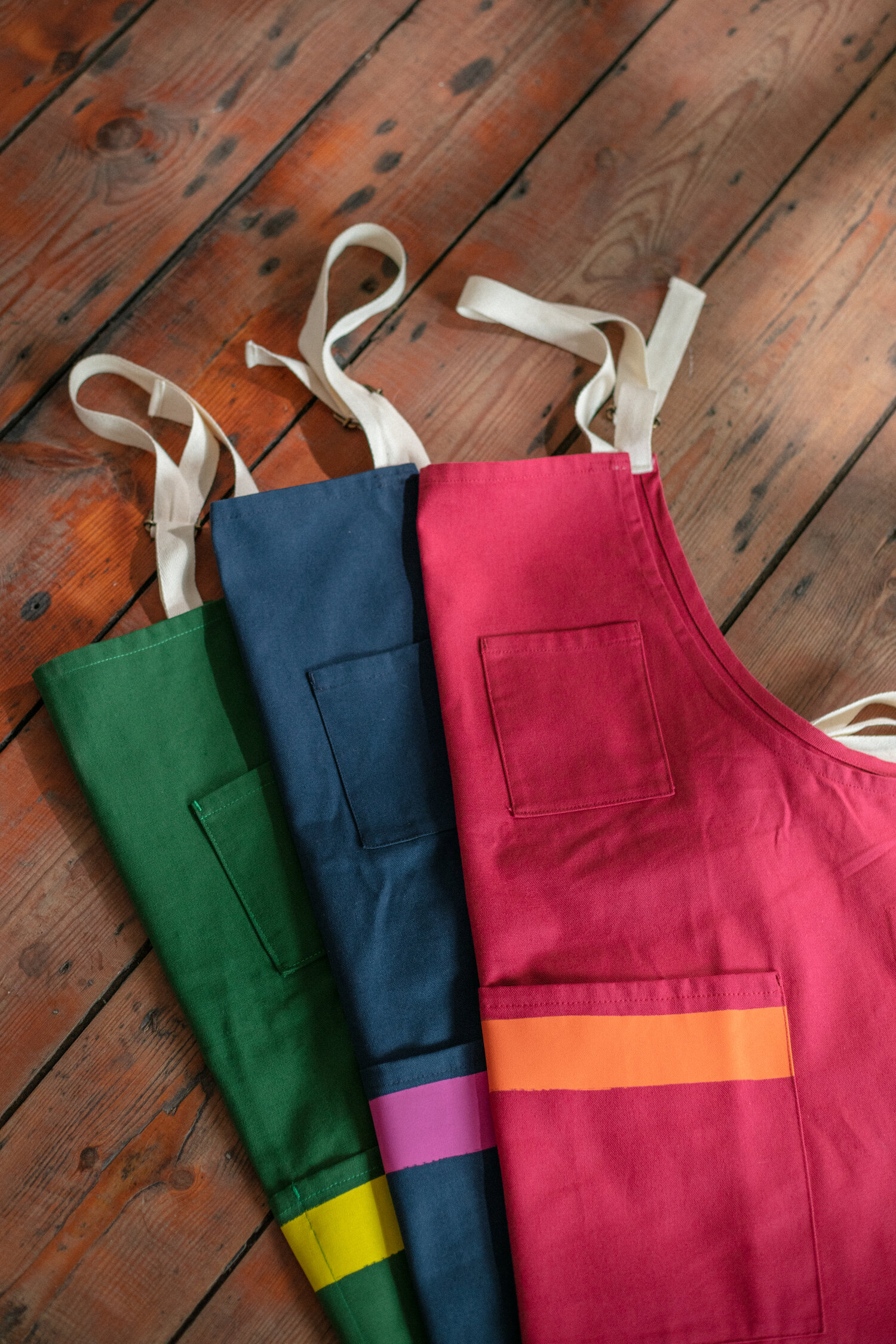
At Some Good Ideas part of our mission is to prove that amazing goods can be made in Great Britain and in so doing to show precisely what this costs. We are happy to share any other information so that you, too, can make things here.
At Some Good Ideas we make goods in Britain using the finest components. This is a way to guarantee the very best quality and to prove that it can be done in Britain; it may not be the easiest thing and it definitely isn’t the cheapest, but it is worth the effort. Part of our challenge is that we’re designing our own things and choosing the components, rather than going to a factory -which would be a lot easier- and just saying ’those things you make, please make some for us in a different colour’.
Anyway, here is our apron. It’s taken us five months to build this and it was worth the wait. The original idea was to see if we could make an apron for the staff in The Glynne Arms, one of our sponsors, that reflected their keen eye for the provenance of their food and drink. And, we succeeded. But we’ve made some for other people too -you!- and here they are.
Manufactured in Ipswich. Screen printed in Huddersfield. Tape made in Cheshire. Labels designed and printed in London. Buckles and fabric from Europe.

Everyone needs a To Do list. So, why not buy this one?
Its paper was milled in Scotland, the printing was done in England using Dutch manufactured mineral based inks and vegetable based inks, the glue is from the West Midlands, the manufacture took place in Lincolnshire, the photographs were taken in Sheffield and the design was created in London.
That’s a lot of information for a To Do list, but we’re proud of these facts.
We haven’t cut corners, we’ve kept production in Britain and we’ve paid the people involved a fair price at every step.
This is a To Do list that champions proper manufacture and design.
It’s also just really, really useful.
You should buy one.
100 sheets.
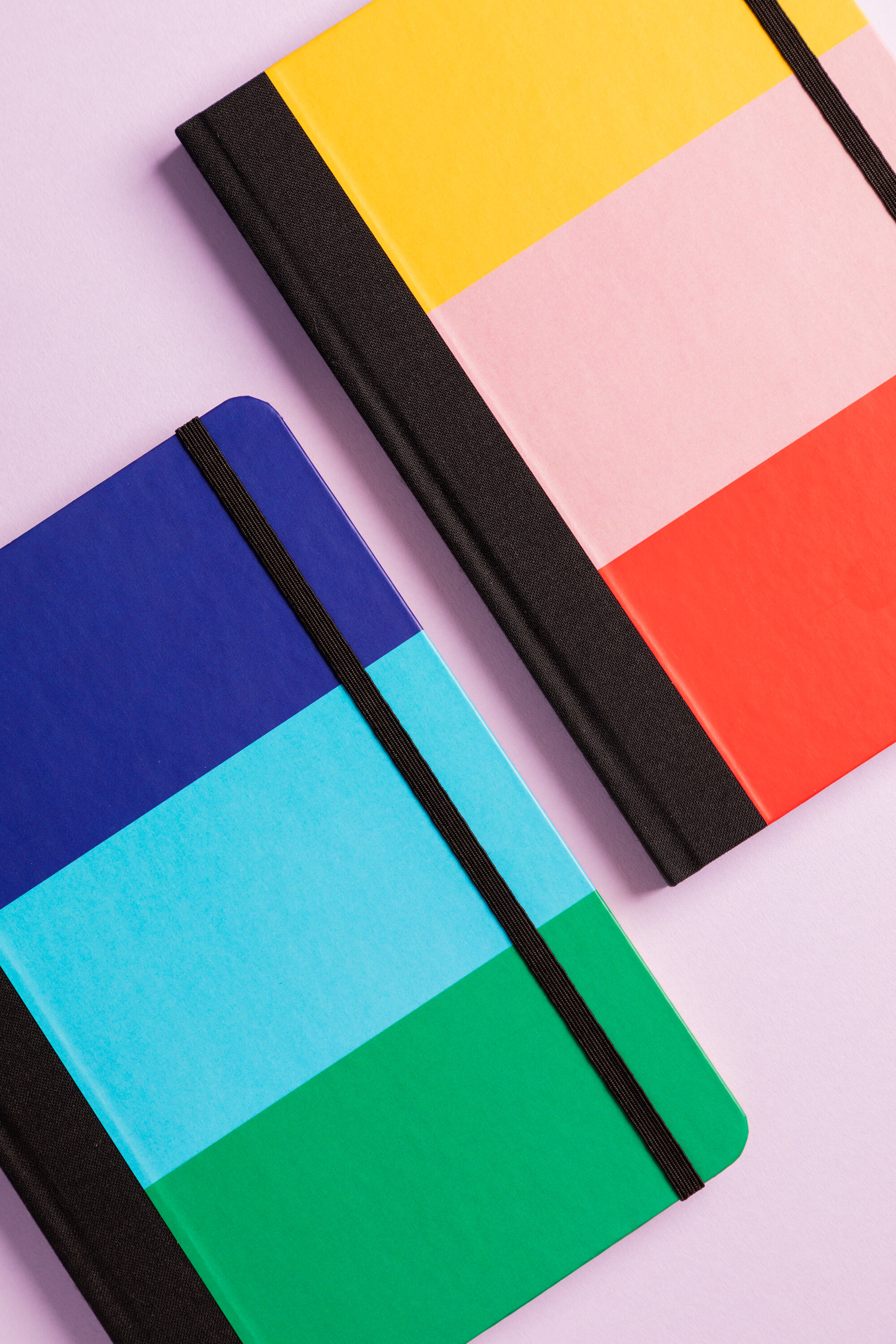
The notepaper in this book is made in Cumbria and the end leaves are made in Britain too, by GF Smith. The cover card is recycled board and is made in Scandinavia.
The book in entirely made in Stamford, GB on a machine built in 1948 and the thread is strong natural linen.
It’s a lovely thing with a mix of lined, checked and plain paper and there’s an elasticated closure.
To find out more about the manufacture and costs involved in making these notebooks, scroll to the bottom of this page where we’ve included lots of detail.

These mugs were hand made in Stoke-on-Trent by someone who is relatively new to the manufacture of tableware but who is employing time-proven, traditional methods of manufacture. The method employed here uses machinery that luxuriates in the unusual name of a Jigger Jolly; this sounds to us like something made up by Roald Dahl but is in fact a piece of machinery that enables the potter to make specific shapes.
This style of mug is a traditional one called a Telford and it uses locally sourced stoneware clay which is strong, vegan and natural. The stripes have been applied by hand using traditional lithographing techniques.
To find out more about the manufacture and costs involved in making these, scroll to the bottom of this page where we’ve included lots of detail.
Discover more ideas on food.

Anyone who knows me well knows that I am a bit of a nerd about etymology and the origins and history of words and how their use and meaning gets changed and corrupted over the years and across continents.
Therein lies the root and inspiration behind this article.
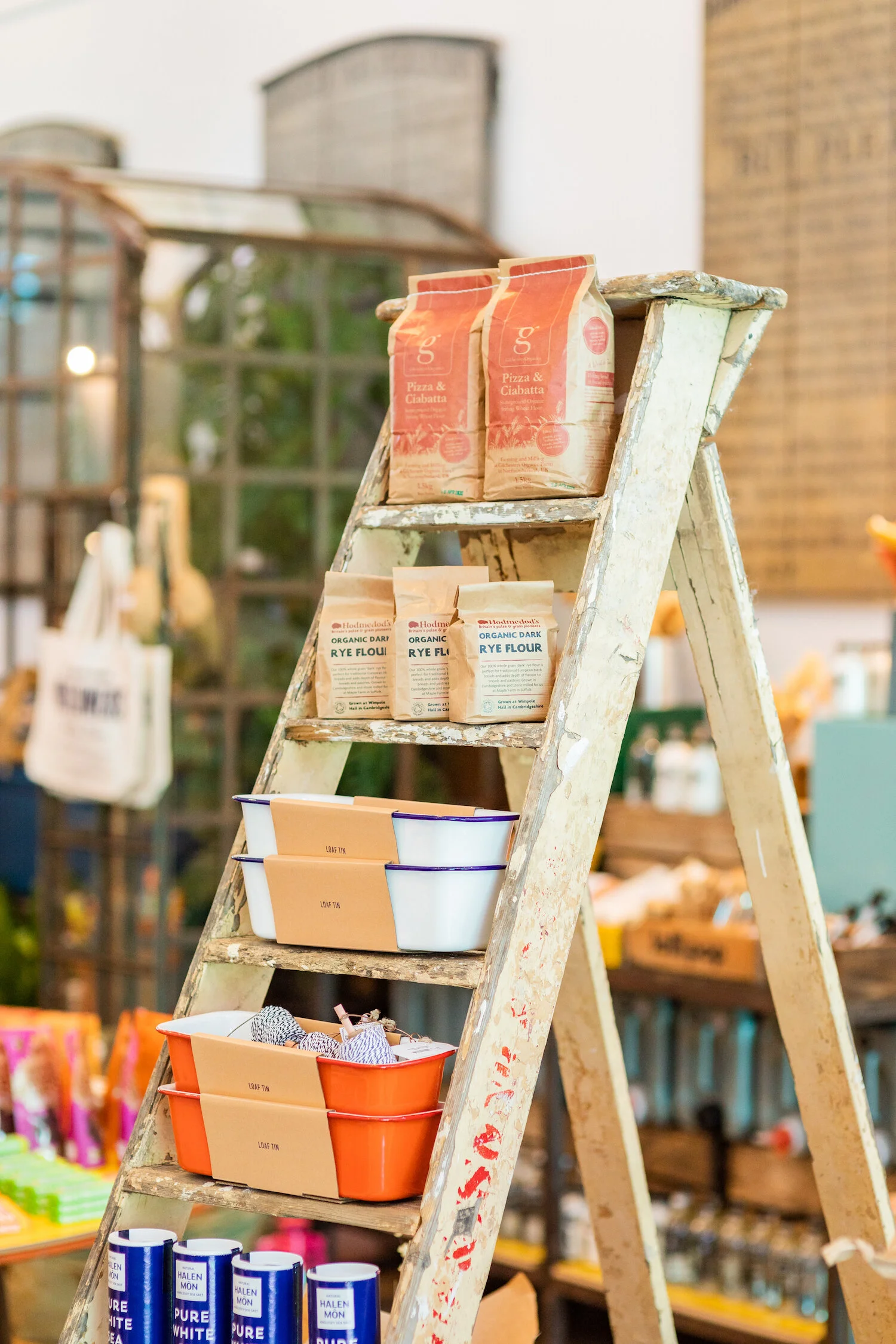
I’m thrilled to present you with a list very close to my heart. Some, I’ve had the pleasure of visiting and relishing their beauty. Others, I’ve simply come across on Instagram and imagined myself there, amongst their four walls, adding delicious items to my basket.

Discover the kitchen equipment chefs Tom Hunt, Gill Meller, Trine Hahnemann, Chris Roberts, Honey & Co’s Sarit and Itamar and Xanthe Gladstone can’t live with out.


Honey & Co. discuss their secrets to sourcing the best fruit and vegetables, what to expect from their new cookbook and the meal they are most looking forward to cooking for friends.

“Gone are the days of Moretti or Heineken on tap. This is the age of the can, whose price makes the old blokes in the corner wince.”

This is a good tea pot.
It’s good because it is made in Britain, it looks amazing, it works well and it’s ethically sourced. Our tea pot was designed by 1882ltd in Stoke-on-Trent by 5th generation makers. No corners were cut in making this product.
We hope that you appreciate its deep integrity and that it offers you years of satisfying use.
To find out more about the manufacture and costs involved in making these tea pots, scroll to the bottom of this page where we’ve included lots of detail. We’re really trying to be transparent here, because our mission is not just to sell great things but to help people to understand that it’s possible to make good things in Great Britain and what, precisely, this costs.
We aim to pay everyone fairly, to make things as sustainably as possible and to support British manufacturers. Inevitably, this means that our goods will cost more than most others, but we think that that is a price worth paying and hope that you’ll agree.